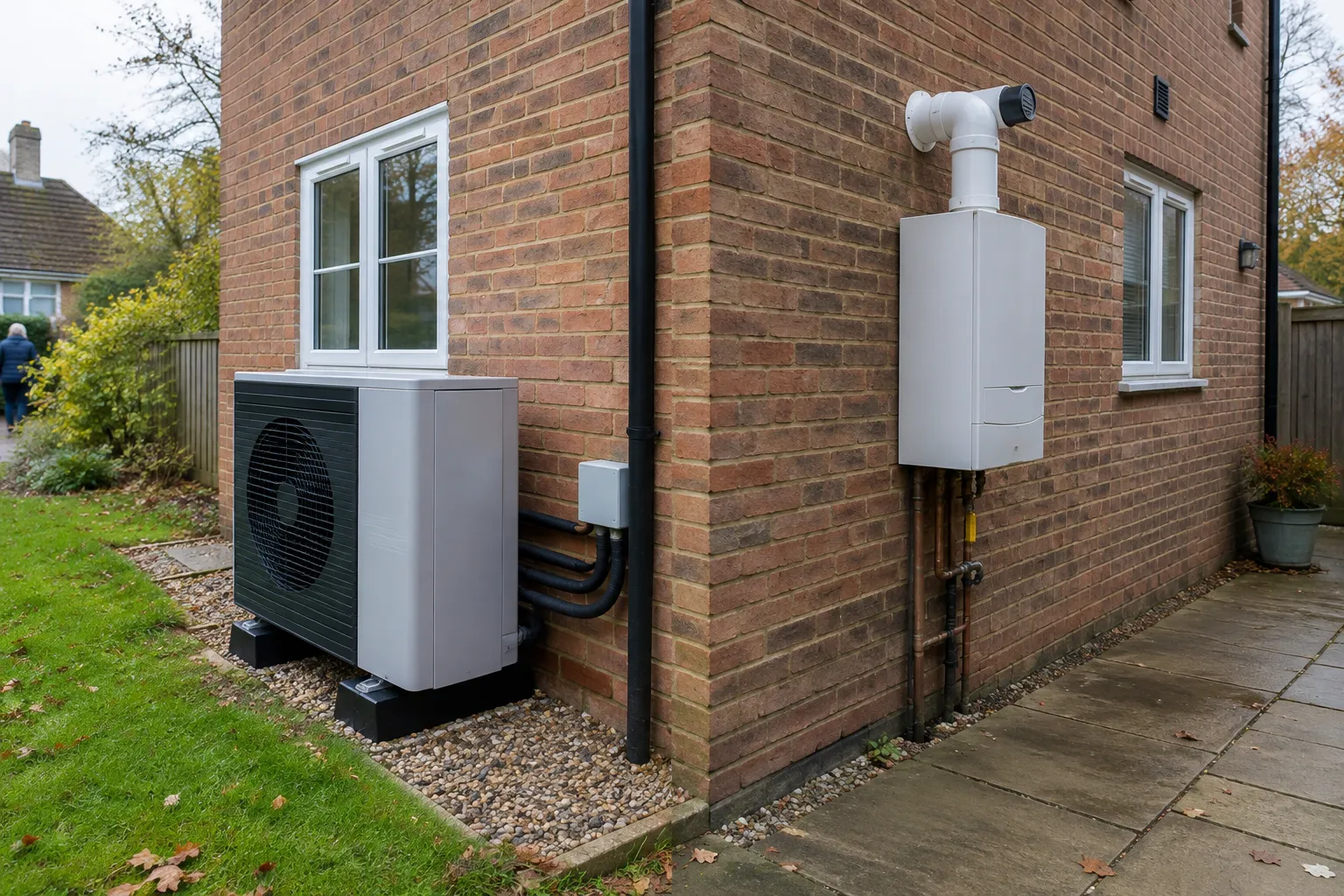
A heat pump is usually cheaper to run than a gas boiler in a well-insulated home, because it produces several units of heat for every unit of electricity it uses, where a gas boiler converts roughly one unit of gas into slightly less than one unit of heat. Whether that holds for your own home depends on your insulation, the heat pump's sizing, and your electricity tariff, so the numbers below are a starting point, not a quote.
Is a heat pump better than gas heating?
A heat pump is typically more efficient than a gas boiler, but "better" depends on your home and budget too. Heat pumps cost more to install upfront, even after the £7,500 grant, and perform best when the home is reasonably well-insulated with radiators sized for lower flow temperatures. A gas boiler is cheaper to fit, more forgiving of poor insulation, but keeps costing more in gas and is being phased out of new-build heating.
If your home already has decent insulation and you're planning to stay in it for years, a heat pump usually works out better over time. If your home needs significant insulation work first, or you're moving soon, a straight boiler replacement may make more sense, at least for now.
What are the downsides of a heat pump compared to a gas boiler?
The main downsides are the higher upfront cost, the need for a proper heat loss survey and possibly new radiators, and less tolerance for poor insulation. A heat pump also runs at a lower flow temperature than a gas boiler, so it heats a room more gradually rather than in a short, hot burst, which some people need to get used to.
Outdoor units need a sheltered, reasonably accessible spot outside, and in flats or terraces, there can be less room to site one, though rules on exactly where it can go have relaxed in recent years.
Is a heat pump better than an electric boiler?
Yes, almost always on running cost. A heat pump produces several units of heat for each unit of electricity it uses, while a direct electric boiler converts electricity to heat roughly one-for-one, so a heat pump is typically far cheaper to run than electric heating, even though both use the same fuel.
What's the difference between an air source and a ground source heat pump?
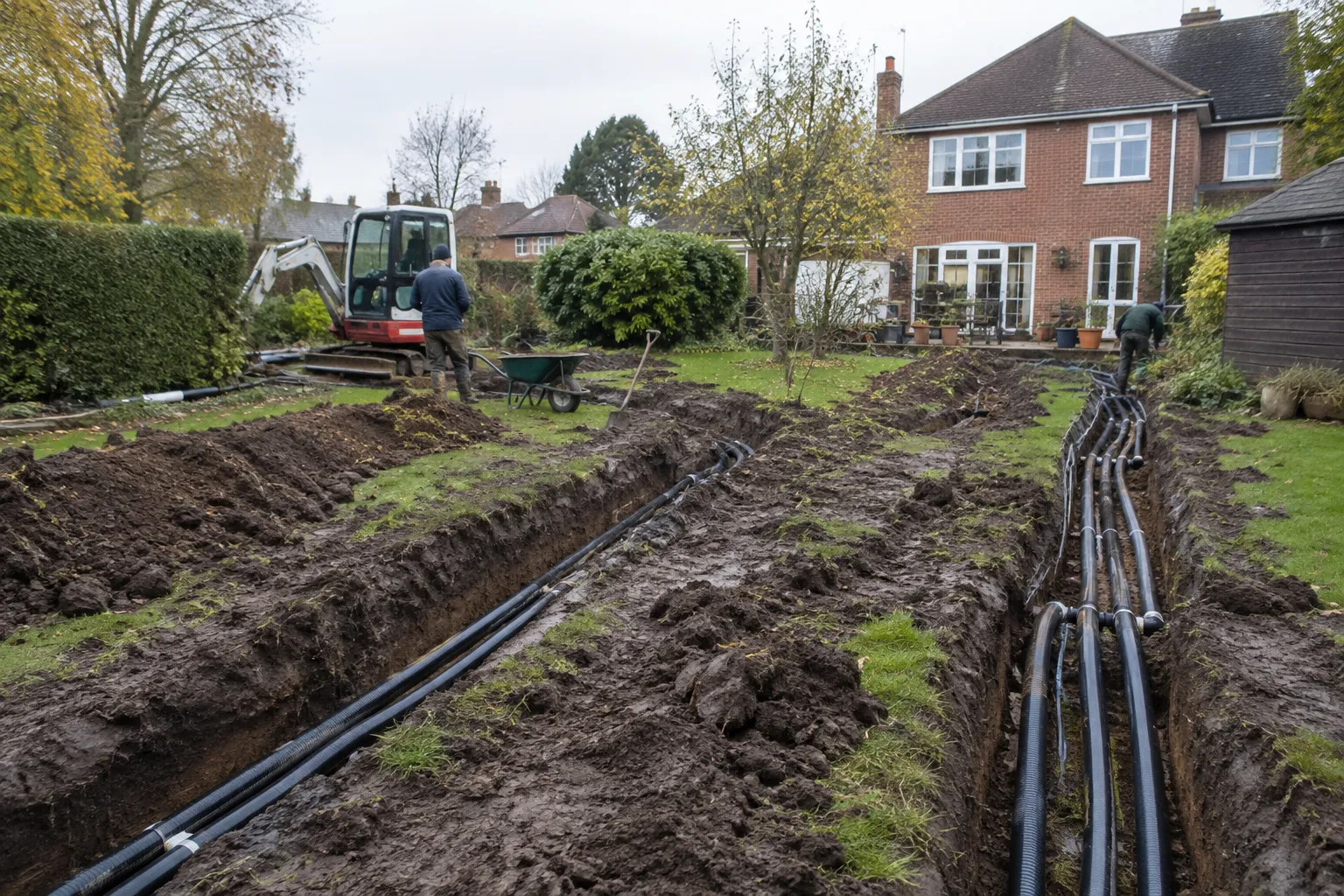
An air source heat pump takes heat from the outside air and is the type most UK homes install, since it needs only an outdoor unit and no groundworks. A ground source heat pump takes heat from the ground through buried pipes or a borehole, which costs more to install but can run more efficiently and needs no outdoor unit on the wall.
Questions people ask
Why is my bill so high with a heat pump?
A high bill with a heat pump usually means it's running at too high a flow temperature, is undersized for the home, or the home's insulation isn't holding the heat it produces. These are things a specialist can check and adjust, rather than a sign heat pumps are inherently expensive to run.
What are the downsides of ground source heat pumps?
Ground source heat pumps cost more to install than air source, because they need either a borehole or enough garden space to bury horizontal pipework. Once installed, they can be more efficient and quieter, since there's no outdoor fan unit, but the extra groundwork cost means they suit larger plots more than small or terraced properties.
Is a heat pump worth it in an older or poorly insulated home?
A heat pump can still work in an older home, but it performs best once the basics of insulation, loft, cavity or floor, are reasonably sorted, since it heats more gradually than a gas boiler. A specialist's survey will say whether your home is ready as it is or needs insulation work alongside the heat pump.
Will I need to change my radiators for a heat pump?
Often, yes, at least some of them. A heat pump usually runs at a lower flow temperature than a gas boiler, so it needs a larger radiator surface area in each room to release the same amount of heat, which your installer's heat loss calculation will show room by room.
Sources
Last updated