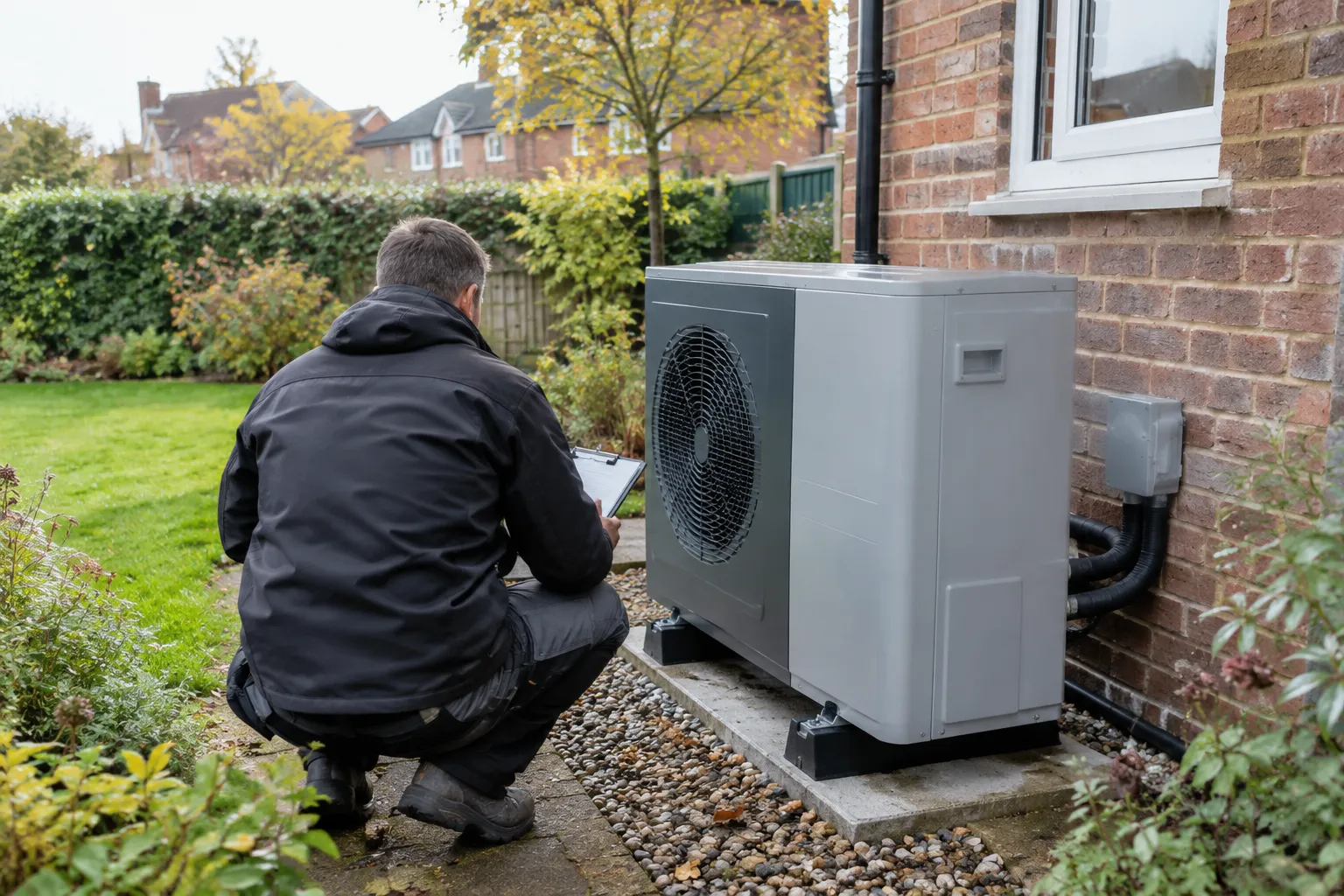
A heat pump installer surveys your home, works out the right size of heat pump for it, fits the outdoor unit and any new pipework or radiators, and commissions the system so it runs correctly from day one. In Surrey, the installer also needs to be MCS accredited if you want to claim the government's heat pump grant. This page covers what the job involves and how to get quotes from local specialists.
What does a heat pump installer do?
A heat pump installer's job starts before any heating is removed: they survey the property, calculate how much heat each room loses, and size the heat pump and radiators (or underfloor heating) to match. They then fit the outdoor unit, run new pipework where needed, connect it to the hot water cylinder, and commission the system, setting it up to run at the right flow temperature for the building.
Good sizing matters more with a heat pump than with a gas boiler, because a heat pump that's too small struggles on the coldest days, and one that's too large runs inefficiently. A proper heat loss calculation, not a guess based on the old boiler's size, is the sign of a specialist who knows the job.
Why does the installer need to be MCS accredited?
MCS (the Microgeneration Certification Scheme) is the UK's quality mark for heat pump and other small-scale renewable installers. Only an MCS-accredited installer can apply for the Boiler Upgrade Scheme grant on your behalf, so if you want the £7,500 towards an air source or ground source heat pump, your installer must hold current MCS accreditation for the technology they're fitting.
You can check an installer's accreditation, and which technologies it covers, on the MCS website before you book. It's also worth asking whether they're registered for the Boiler Upgrade Scheme specifically, since accreditation and scheme registration aren't always the same thing.
What does installing a heat pump involve?
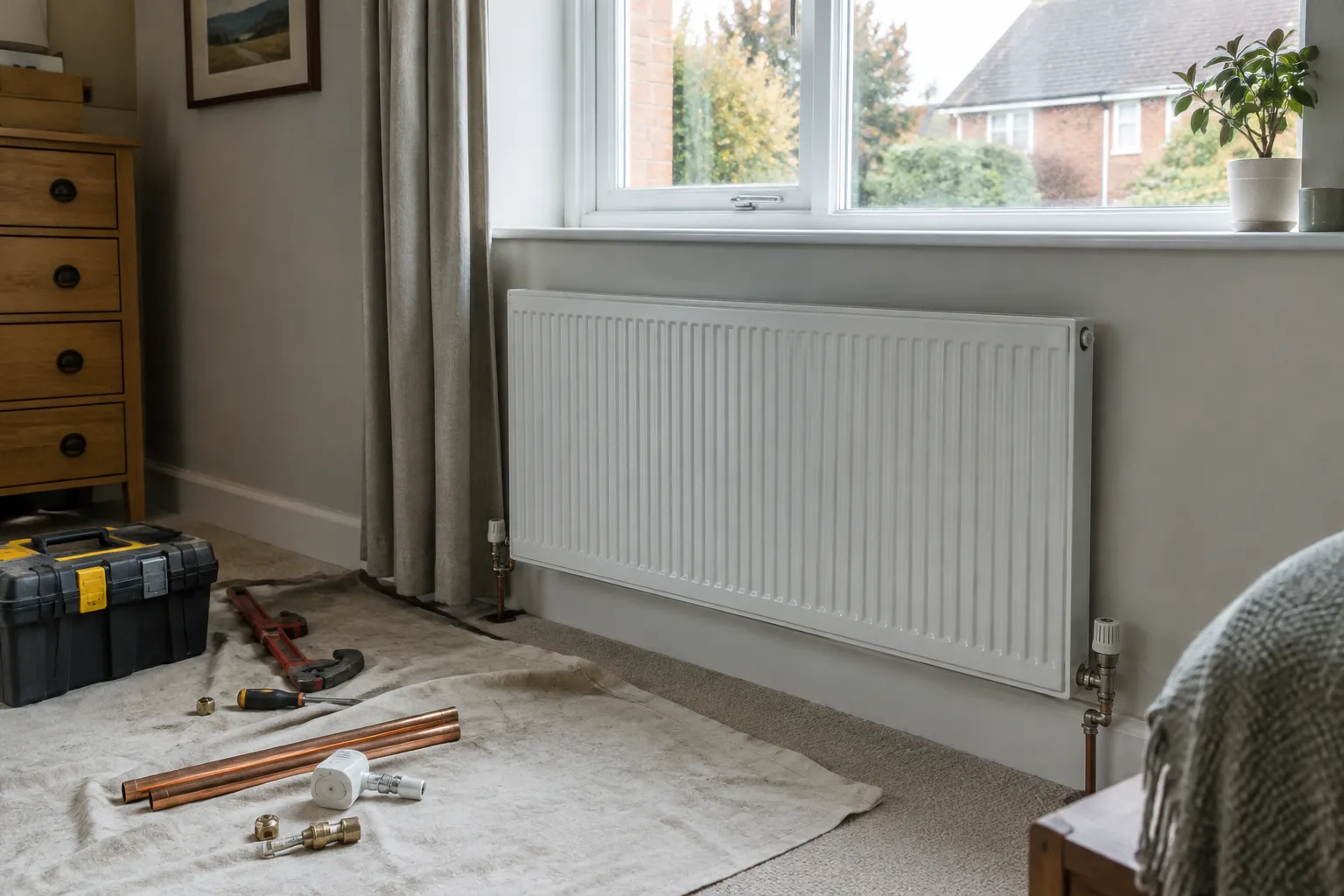
Most domestic installations take one to three days for the main work: fitting the outdoor unit, connecting pipework, and swapping or upgrading radiators if the old ones are too small for the lower flow temperatures a heat pump runs at. A hot water cylinder is usually fitted too if the home doesn't already have one, since most heat pumps don't work with a combi-style instant hot water setup the way a gas boiler can.
If you're also weighing a heat pump against sticking with gas, our boiler vs heat pump page covers the running cost and practical differences. If you're wondering how much of the job you could reasonably do yourself first, see heat pump installation DIY.
Are heat pumps expensive to run?
Running cost depends on your electricity tariff and how efficiently the heat pump is installed and sized, so there's no single answer, but a well-installed heat pump is typically cheaper to run than electric heating and often comparable to or cheaper than gas once the Boiler Upgrade Scheme grant has covered part of the upfront cost. See our air source heat pump cost page for a fuller breakdown.
Questions people ask
Why is my bill so high with a heat pump?
A high bill usually points to the system running at too high a flow temperature, being undersized for the home, or the home having poor insulation that a heat pump can't make up for on its own. A specialist can check the settings and the original heat loss calculation to see where the fault lies.
Why is my house so cold with a heat pump?
This is almost always a sizing or settings issue rather than a fault with heat pumps generally: an undersized unit, radiators that haven't been upgraded for lower flow temperatures, or a flow temperature set too low for how well-insulated the home is. It's worth getting the original installer or another MCS-accredited specialist to check the setup.
How long does a heat pump installation take?
The main installation work usually takes one to three days, depending on whether radiators need upgrading and how much new pipework is involved. Add time either side for the initial survey and heat loss calculation, and for commissioning and handover.
Do I need to replace my radiators when I get a heat pump installed?
Often some radiators need to be upgraded, because a heat pump usually runs at a lower flow temperature than a gas boiler and needs a bigger radiator surface area to release the same heat. Your installer's heat loss calculation will show which rooms, if any, need a larger radiator.
Guides in this section
- Boiler vs heat pump
How a heat pump compares with a gas or electric boiler on running cost, efficiency and upfront price, and how to get local quotes for…
- Grants & the Boiler Upgrade Scheme
How the £7,500 Boiler Upgrade Scheme grant works, who can get it, and how to apply through an MCS-accredited installer in Surrey.
- Heat pump installation diy
Which parts of a heat pump installation you can legally do yourself, and why the refrigerant work needs a suitably accredited professional.
Sources
Last updated